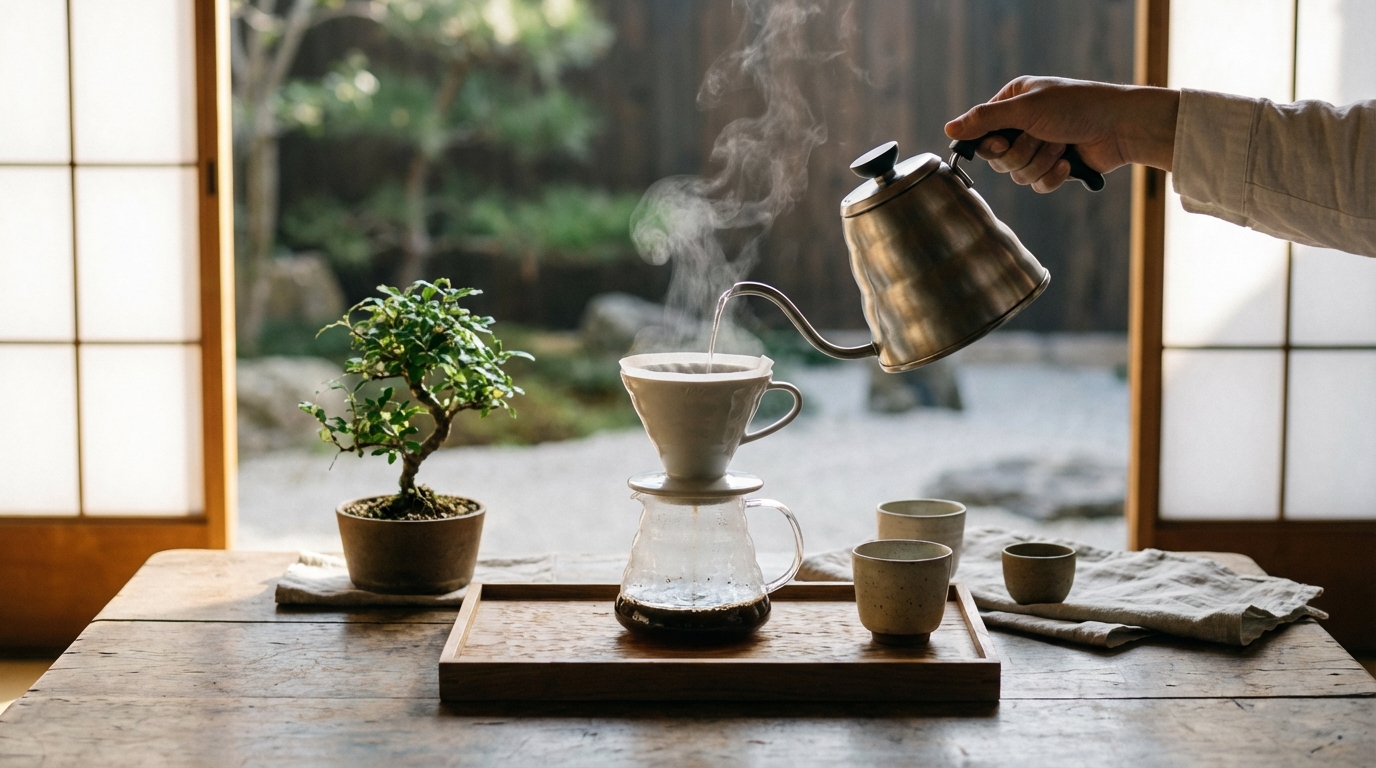
Coffee and Meditation: The Art of Slow Coffee
We live in an age where everything is fast. Instant coffee, single-serve capsules, drive-through cafes. Caffeine has become functional fuel, swallowed without attention between one task and the next. But there is a movement that proposes the opposite path: slow down, pay attention, transform the brewing of coffee into an act of presence. This movement is called slow coffee, and it has more in common with meditation than you might imagine.
What Is Slow Coffee
Slow coffee is not merely a brewing method — it is a philosophy. The term refers to the act of preparing coffee manually, with intention, dedicating time and attention to every stage of the process. Instead of pressing a button and waiting, you grind the beans, heat the water, control the pour, and observe the extraction as it happens.
The pillars of slow coffee
- Manual brewing: methods requiring active participation, such as V60, Chemex, French press, Aeropress
- Intentionality: every gesture is conscious, not automatic
- Time as an ingredient: haste is incompatible with the process. Time is part of the recipe
- Sensory attention: engaging all five senses during brewing and tasting
- Appreciation of process: the journey matters as much as the destination
The concept is not new. Cultures such as the Japanese (with their tea ceremony) and the Ethiopian (with their coffee ceremony) have practiced for centuries the idea that preparing a beverage can be a sacred ritual. Slow coffee is, in a sense, the contemporary version of that ancestral wisdom.
Mindfulness in Brewing: Meditation in Action
Mindfulness is the practice of being completely present in the current moment, without judgment. We normally associate meditation with sitting in silence with closed eyes. But meditation can happen in any activity requiring total presence, and manual coffee brewing is a perfect candidate.
Why coffee works as an anchor for attention
Manual coffee preparation engages all senses simultaneously:
- Sight: observing the color of the beans, the foam forming during extraction, the flow of water
- Hearing: the sound of beans being ground, water boiling, the bubbling of infusion
- Touch: the texture of beans in the hand, the warmth of the cup, the weight of the kettle
- Smell: the aroma of freshly ground beans, the steam rising from hot water, the notes that transform throughout brewing
- Taste: the first sip, the evolution of flavor as the coffee cools
When you direct your attention to these sensations, mental noise diminishes. Worries about the past and anxiety about the future give way to the only moment that truly exists: the present.
An accessible practice
Unlike seated meditation, which many people find difficult or tedious, coffee brewing offers a concrete anchor. There is something to do, something to observe, something to feel. For those who struggle to “empty the mind” sitting in silence, slow coffee can serve as a gateway to the practice of mindfulness.
Neuroscience research suggests that repetitive ritualistic activities — like grinding coffee, pouring water in circular motions, waiting for extraction — activate the parasympathetic nervous system, associated with relaxation and stress reduction. The body recognizes the routine and calms down.
The Tasting Ritual: Four Sensory Pillars
If brewing is meditation in action, tasting is contemplation. When you taste coffee with full attention, you discover layers of complexity that pass unnoticed in the rush of daily life.
Aroma
Before the first sip, bring your nose close to the cup. Close your eyes. What do you perceive? Coffee aroma has more than 800 identified volatile compounds — more than wine. You may find floral, fruity, chocolatey, woody, caramel, or herbal notes. Each tells something about the origin, processing, and roast of that bean.
Aroma also changes over time. Hot coffee releases more volatile compounds; as it cools, other aromas emerge. Smelling the cup at different moments is like watching a landscape transform with the light of day.
Flavor
The first sip deserves total attention. Do not swallow immediately. Let the coffee cover your entire tongue. Different regions of the mouth perceive distinct sensations: the tip captures sweetness, the sides acidity, the back bitterness.
Try to identify specific flavors. Red berries? Chocolate? Nuts? Flowers? There is no wrong answer. Every palate is unique, and the practice of naming what you taste refines perception over time.
Texture (body)
The body of coffee is the sensation of weight and texture in the mouth. A coffee can be light and watery like tea, or dense and creamy like whole milk. Pay attention to this sensation. It reveals much about the brewing method, roast, and bean variety.
Texture also includes sensations of dryness (astringency), oiliness, and viscosity. Each brewing method produces a different texture: French press tends to be fuller-bodied because it uses no paper filter, while V60 produces a cleaner, lighter cup.
Aftertaste
The aftertaste is what remains in the mouth after swallowing. In quality coffees, this sensation can last several seconds or even minutes. Pay attention: does the flavor change? Does something new emerge? A good specialty coffee frequently reveals its best notes in the aftertaste — a late sweetness, a delicate floral, a lingering touch of cacao.
The aftertaste is also the best indicator of quality. Defective coffees leave an unpleasant, bitter residue. Exceptional coffees leave you wanting the next sip.
Ideal Methods for Slow Coffee
Not every brewing method lends itself to slow coffee. Those that work best are ones that require active participation and allow control over each variable.
V60
The V60 dripper, created by Hario in Japan, is perhaps the most meditative method of all. The entire brew depends on manual control of the water pour.
- Total time: 3 to 4 minutes
- What makes it meditative: the circular motion of water over the coffee demands constant concentration. Speed, height, and pouring pattern directly affect the result. It is impossible to brew a good V60 while thinking about something else
- In the cup: light to medium body, bright acidity, clarity of flavors
The ritual begins with rinsing the paper filter (to remove paper taste and preheat), followed by the “bloom” — a small amount of water that hydrates the coffee and releases roasting gases, creating an aromatic foam. Watching the bloom is a small moment of magic.
Chemex
The Chemex combines function and form in an iconic piece of design. Invented in 1941 by a German chemist, its elegant aesthetics already merit contemplation.
- Total time: 4 to 5 minutes
- What makes it meditative: the Chemex’s thicker filter slows extraction, demanding patience. The pour is slower, the movements more deliberate
- In the cup: lighter body than V60, extremely clean flavor, delicate notes that go unnoticed in other methods
Brewing coffee in a Chemex is like painting a watercolor: it requires lightness, patience, and acceptance that the process has its own rhythm.
French press
The French press is the most contemplative method. You add the coffee, pour the water, and wait. Time does the work.
- Total time: 4 to 5 minutes of steeping, plus preparation
- What makes it meditative: the waiting. Four minutes without stirring, without controlling, simply being present. For those who live in “doing” mode, this time of non-action can be transformative
- In the cup: dense, full body, oily texture, robust and rounded flavors
The French press does not require refined pouring technique, but it compensates with the contemplative experience of immersion. The moment of pressing the plunger, slowly, feeling the resistance of the coffee, is almost ceremonial.
Creating Your Own Ritual
Slow coffee does not need to be an elaborate production. It can be as simple as dedicating ten minutes every morning to a conscious brew. Some suggestions for creating your ritual:
- Disconnect: leave your phone in another room. The coffee ritual is your moment
- Prepare the space: a clean counter, organized tools. External order supports internal calm
- Grind fresh: if possible, use a hand grinder. The repetitive act of turning the handle is meditative in itself
- Follow with your senses: at each stage, ask yourself: what am I seeing, hearing, smelling, feeling?
- Taste without rushing: the first sips without phone, without conversation, without distraction. Just you and the coffee
- Accept imperfection: not every brew will be perfect, and that is fine. The process matters more than the result
Slowing Down to Feel More
In a culture that glorifies speed, choosing slowness is an act of gentle resistance. Slow coffee will not change the world, but it can change your morning. And a different morning, repeated over many days, can change how you relate to time, to flavor, and to yourself.
Specialty coffee, by its very nature, asks for attention. It was cultivated, processed, roasted, and prepared with care. The least we can do is repay that dedication with presence.
Visit Consciencia Cafe and experience slow coffee with us. Whether you are visiting Iguazu Falls or exploring the Triple Border, our baristas can guide you through a mindful tasting, transforming a simple coffee break into a moment of connection and serenity.