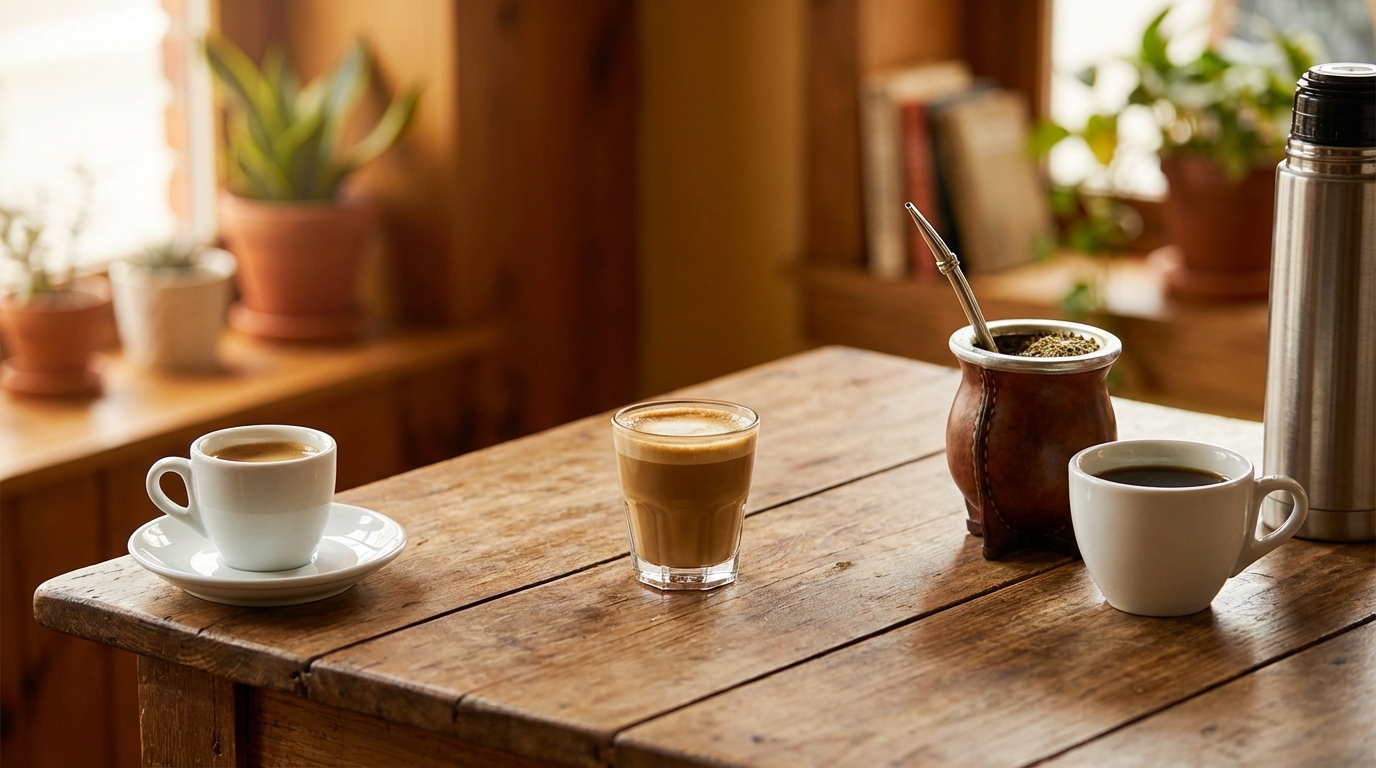
The Triple Border between Brazil, Argentina, and Paraguay is one of the most singular points on the continent. Within a few kilometers, three countries meet, bringing with them distinct languages, customs, and histories. And in few things does this diversity manifest as clearly as in the relationship each of these peoples has with coffee.
Foz do Iguacu, the Brazilian city at the heart of this border, is the natural stage for this convergence. Here, the Brazilian cafezinho coexists with the Argentine cortado and with Paraguay’s growing specialty coffee scene. Understanding these cultures means understanding the region.
Brazil: the land of cafezinho
A centuries-old history
Brazil is the world’s largest coffee producer, a position it has held since the mid-19th century. This relationship with the bean has shaped the country’s economy, geography, and culture profoundly. From the farms of the Paraiba Valley to the plantations of the Minas Gerais Cerrado and the mountains of Espirito Santo, coffee is in Brazil’s DNA.
But coffee culture in Brazil goes beyond production. The cafezinho, that small, strong, and often sweetened coffee, is an inescapable social ritual. Offering a cafezinho is a sign of hospitality. Refusing one is almost an offense. In homes, offices, bakeries, and on sidewalks, the cafezinho marks the rhythm of the day.
Filter and espresso
The most traditional brewing method in Brazil is the coado, made with a cloth or paper filter. Hot water passes through fine to medium ground coffee, producing a clean and aromatic drink. This method, present in virtually every Brazilian kitchen, is simple and democratic.
Over the last two decades, espresso has gained enormous ground in urban Brazil. Espresso machines have become common in coffee shops, restaurants, and even offices. And with espresso came greater attention to bean quality, roast profiles, and preparation techniques, driving the specialty coffee movement that is now one of the most vibrant in the world.
Brazilian specialty coffee
Brazil has become not only a major producer but also a significant consumer of quality coffee. Regions such as Sul de Minas, Chapada Diamantina, the Cerrado, and the mountains of Espirito Santo produce beans with complex sensory profiles recognized in international competitions. Notes of chocolate, caramel, stone fruits, and nuts are hallmarks of the best Brazilian coffees.
Paraguay: from terere to specialty coffee
The reign of terere
When speaking of Paraguay’s national drink, terere holds the throne absolutely. This cold infusion of yerba mate, consumed from a guampa with a bombilla, is ubiquitous in Paraguay. On the streets of Ciudad del Este, in the plazas of Asuncion, in the countryside, terere is an inseparable daily companion.
Terere is not just a drink: it is a social ritual. Sharing the guampa creates bonds, marks gatherings, and defines rhythms. In this context, coffee has historically played a secondary role in Paraguayan culture.
The growth of specialty coffee
In recent years, something interesting has been happening in Paraguay. A new generation of entrepreneurs and consumers has begun exploring specialty coffee with growing enthusiasm. Specialty coffee shops have appeared in Asuncion and, more recently, in Ciudad del Este.
Paraguay has also started developing its own coffee production. Although on a smaller scale than Brazil’s, some Paraguayan farms are experimenting with varieties like Catuai and Bourbon, taking advantage of favorable microclimates in the country’s eastern region.
This movement is particularly interesting because it does not replace terere but rather complements it. Paraguayans are discovering that it is possible to love terere in the morning and appreciate a specialty coffee in the afternoon.
Argentina: cortado, medialunas, and confiterias
The confiteria culture
Argentina’s relationship with coffee is deeply marked by European influence, especially Italian and Spanish. Argentine confiterias, with their pastry display cases, marble tables, and apron-clad waiters, are cultural institutions that resist the passage of time.
In these confiterias, coffee is part of a ritual that includes medialunas (Argentine croissants), facturas (assorted pastries), and long conversations. The merienda hour, between four and six in the afternoon, is sacred. And coffee is the quiet protagonist of this scene.
The cortado and cafe con leche
The most classic order in Argentina is the cortado: an espresso cut with a small amount of hot or steamed milk. It is a balanced drink, less intense than a straight espresso, but without the dilution of a latte. The Argentine cortado is served in a small cup, usually accompanied by a glass of sparkling water.
The cafe con leche, in turn, is the breakfast choice. Served in a large cup, with equal parts strong coffee and hot milk, it accompanies the medialunas that define the Argentine desayuno.
Third wave in Argentina
Argentina is also experiencing a specialty coffee revolution. Buenos Aires has become a hub for third-wave coffee shops, with award-winning baristas and artisan roasters. This movement is beginning to reach the country’s interior, including border cities like Puerto Iguazu, just across the river from Foz do Iguacu.
Where the three cultures meet
Foz do Iguacu is, by nature, a point of convergence. Daily, thousands of people cross the bridges connecting the three countries. Brazilians shop in Ciudad del Este. Argentines come to Brazil for business and tourism. Paraguayans cross over to work and study. This constant circulation creates a unique hybrid culture.
At Consciencia Cafe, this convergence manifests in several ways. The menu incorporates elements from all three traditions. Service naturally happens in Portuguese, Spanish, and Portunhol, that lingua franca of the border. Customers come from all three countries, bringing with them their preferences and curiosities.
An Argentine visitor who orders their cortado might be introduced to a Brazilian pour-over. A Brazilian accustomed to sweetened cafezinho might discover the complexity of an unsweetened espresso. A Paraguayan who knows every nuance of terere might be surprised by the fruity notes of a natural-process coffee.
The border as a flavor laboratory
The Triple Border is not merely a geographic point: it is a cultural laboratory where habits meet, blend, and reinvent themselves. Coffee, as a universal language, serves as a bridge between these cultures. It does not matter whether you call it cafezinho, cortado, or simply coffee: the act of sitting down, having a cup, and sharing a moment is the same in any language.
This diversity is a richness that few places in the world can offer. And at a coffee shop table, with a cup in hand, borders simply disappear. For travelers visiting the majestic Iguazu Falls, exploring this cultural dimension of the region adds a layer of meaning to the journey that goes far beyond the natural spectacle.
Visit Consciencia Cafe and discover the coffee that unites three countries. Here, every cup tells a story of borders, diversity, and encounter.