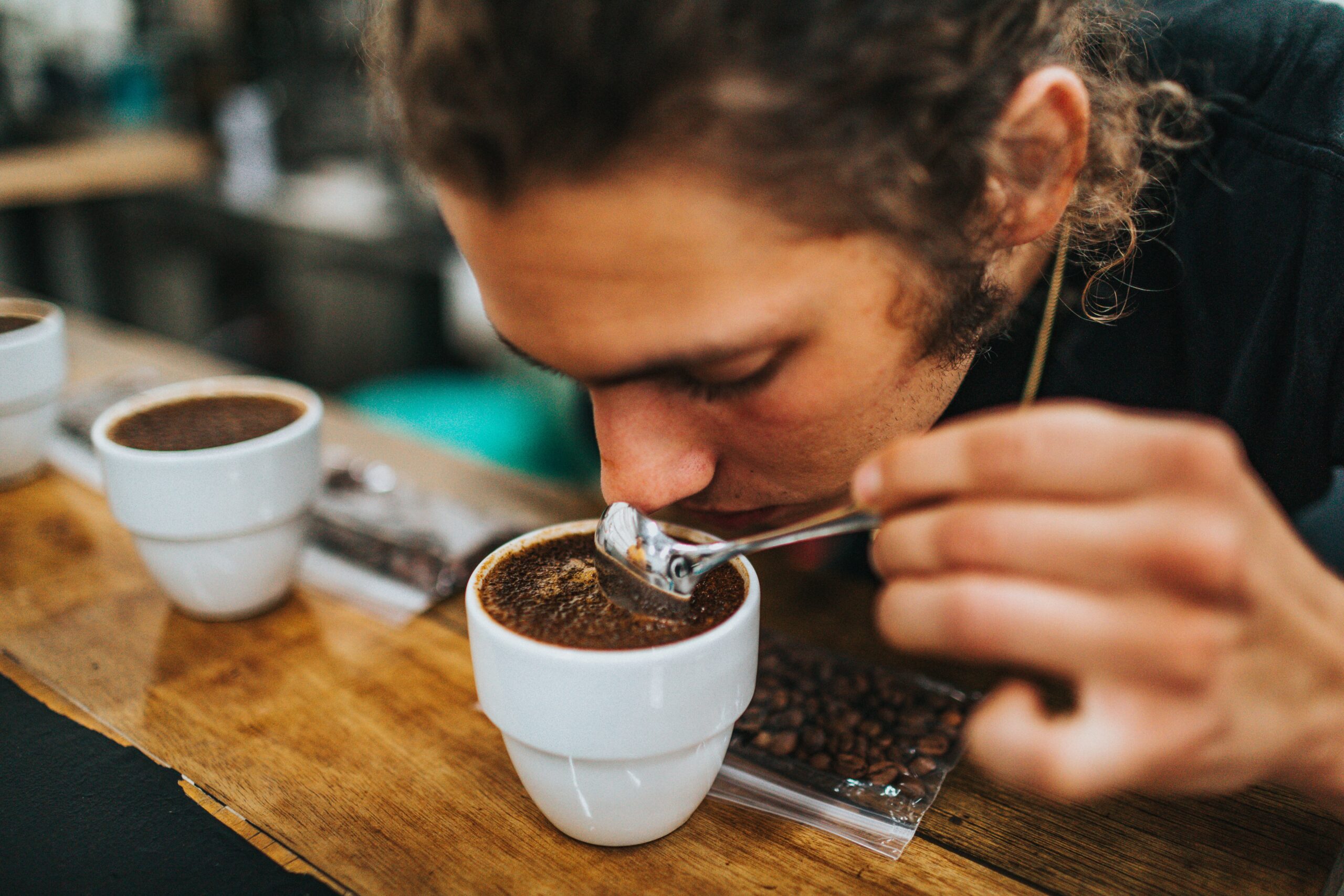
When it comes to specialty coffee, every phase of production is closely examined. Cupping is one of the main evaluation methods that confirms the quality of coffee.
How Did Cupping Begin?
In the late 19th century, traders developed the first tasting techniques to verify the quality and consistency of coffees. Later, these methodologies came to be used in international competitions such as the Cup of Excellence (since 1999). The SCA developed the standardized cupping method to classify specialty coffees above standard grade.
Why Is Cupping Necessary?
The methodology helps specialists determine the unique characteristics of coffees and evaluate several simultaneously. Green coffee buyers, roasters, quality control specialists, baristas, and coffee shops all use cupping to make decisions about selection and preparation.
How Is Cupping Done?
The process follows 12 main steps:
- Gather equipment (ground coffee, bowls, hot water, scale, grinder)
- Choose a well-lit space, free of aromas
- Use standardized utensils according to SCA recommendations
- Prepare freshly roasted coffee samples
- Label samples (preferably blind)
- Evaluate the dry aroma
- Prepare the brew (18g of coffee to 150g of water, 3-5 minute infusion)
- Clean the brew by removing the crust
- Begin tasting
- Identify sensations and flavors
- Spit out the coffee between samples
- Fill out the evaluation form
Tasting involves letting the coffee pass over the tongue until it creates vapor, stimulating both palate and olfactory senses to identify a range of flavors.
Want to learn more about cupping? Come to Consciencia Cafe and discover the world of professional coffee tasting!