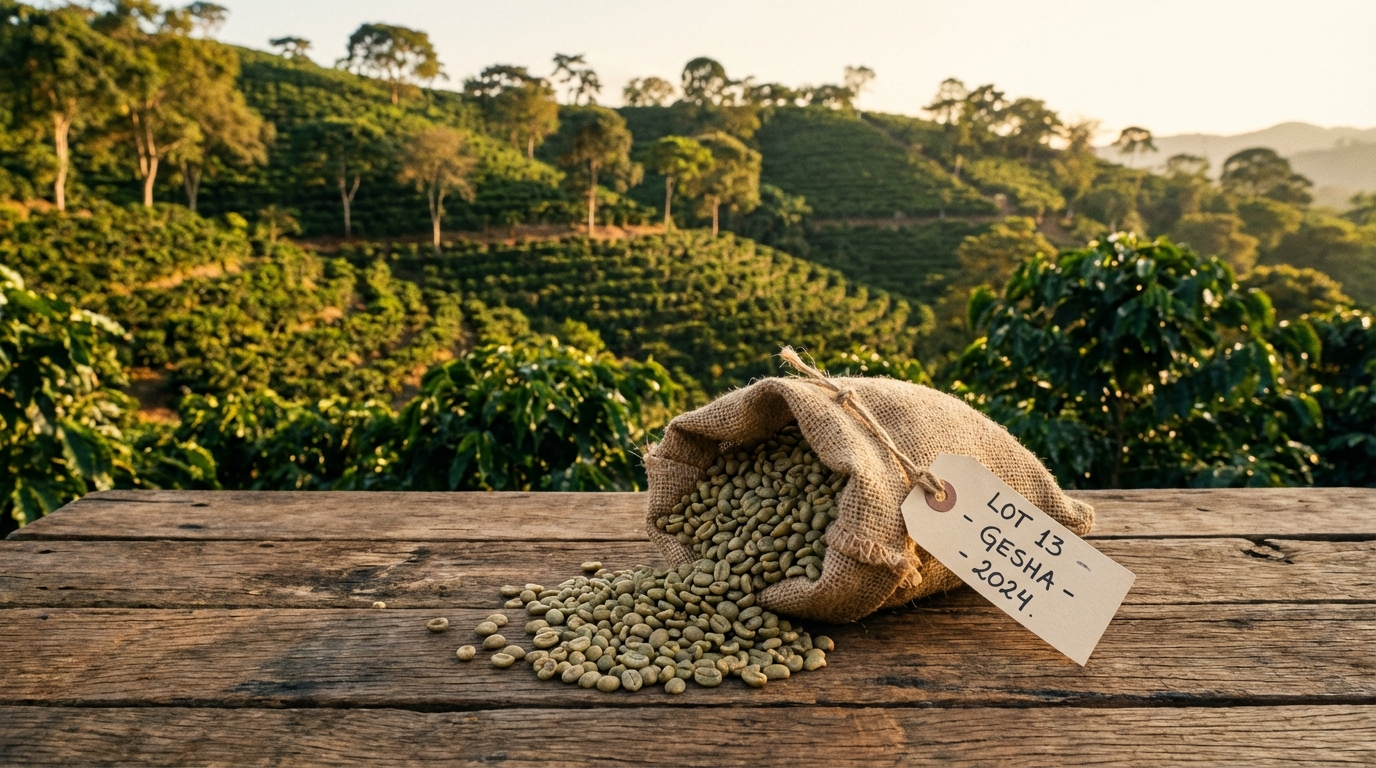
Micro-lots: What They Are and Why They Matter
In the world of specialty coffee, few words carry as much promise as “micro-lot.” This term, appearing increasingly on packaging and cafe menus, represents the polar opposite of mass production: tiny lots, tended with artisanal attention, and flavors that tell the precise story of where they came from. But what exactly defines a micro-lot, and why should you care?
What Defines a Micro-lot
A micro-lot is an extremely limited coffee production, generally fewer than ten bags of sixty kilograms each. For perspective, a commercial coffee farm may produce hundreds or thousands of bags per harvest. A micro-lot therefore represents a minuscule fraction of that output.
But it is not just a question of quantity. To be considered a micro-lot, the coffee must meet specific criteria:
- Single origin: it comes from a single property, and frequently from a single plot or demarcated area within the farm
- Uniform process: all beans undergo the same processing method (natural, washed, honey, or another)
- Selective harvest: only fruit at the ideal point of ripeness is picked, usually by hand
- Total traceability: it is possible to identify exactly where each bean came from, when it was harvested, how it was processed, and by whom
Micro-lot versus conventional lot
In commercial coffee, beans from different farms, regions, and even countries are blended to create a consistent flavor profile. This is not necessarily a bad thing — it is how most of the world’s coffee is produced. But this blending erases the individual characteristics of each origin.
A micro-lot does the opposite. It preserves and celebrates the unique identity of a specific coffee, from a specific place, at a specific moment in time.
Terroir: The Concept That Explains Everything
If you have heard of terroir in the wine world, the principle is identical in coffee. Terroir is the set of environmental factors that influence the final flavor of the bean, and understanding it is the key to appreciating micro-lots.
Altitude
Altitude is perhaps the most impactful factor. Coffees grown above 1,200 meters ripen more slowly because nights are cooler. This slow maturation allows the bean to accumulate more sugars and complex organic acids, resulting in a cup with more vibrant acidity, pronounced sweetness, and aromatic complexity.
Micro-lots frequently come from specific elevations within a farm. A single property may have areas at 900 meters and others at 1,400 meters, and the coffees from these areas will be radically different.
Soil
Soil composition directly affects plant nutrition and, consequently, the bean’s profile. Volcanic soils, common in regions like Colombia and parts of Ethiopia, are rich in minerals and tend to produce coffees with a more pronounced body and mineral notes. Clay soils can contribute to greater sweetness. Sandy soils with good drainage may favor cleaner acidity.
Climate and microclimate
Temperature, humidity, rainfall patterns, sun exposure — all of this impacts fruit development. A micro-lot from an east-facing slope receives morning sun and afternoon shade, creating a different microclimate than a plot on the same farm facing west.
Even the presence of native trees surrounding the coffee plantation (so-called shade-grown coffee) alters the microclimate, slowing maturation and adding complexity to the sensory profile.
Botanical variety
Just as there are different grape varietals in wine, there are different coffee varieties. Bourbon, Typica, Gesha, Catuai, SL28 — each has genetic characteristics that influence flavor potential. Micro-lots frequently spotlight rare varieties or specific genetic inheritances that express themselves uniquely in a particular terroir.
Traceability: Knowing Where Every Bean Comes From
Traceability is one of the pillars that makes micro-lots so valuable. When you buy a micro-lot, you know:
- The name of the producer or producing family
- The exact location of the farm, including altitude
- The botanical variety planted
- The processing method used
- The harvest date
- The SCA (Specialty Coffee Association) evaluation score
This transparency is not merely a matter of curiosity. It allows you, as a consumer, to make informed choices. And it allows the producer to be recognized for their individual work, not diluted into an anonymous mass of commodity.
The story behind each cup
Every micro-lot tells a story. Perhaps it is from a family that has grown coffee for three generations in southern Minas Gerais, Brazil, and decided to experiment with natural processing instead of washed. Or from a Colombian producer who planted the rare Gesha variety at 1,800 meters and harvested only forty kilograms of an extraordinary bean.
When you drink a micro-lot, you are not just drinking coffee. You are participating in a narrative that connects land, climate, human labor, and science in a single cup.
Fair Price: Direct Compensation to the Producer
Here is an aspect many people do not realize: micro-lots cost more, but that price difference goes directly to those who most deserve it.
The commodity market problem
In the traditional coffee market, price is set by the New York stock exchange (for arabica) or London (for robusta). This fluctuating price frequently fails to cover the farmer’s production costs, especially for small producers.
How micro-lots change this dynamic
When a cafe or roaster purchases a micro-lot, the negotiation is direct with the producer. There are no intermediaries diluting the value. The price reflects the real quality of the coffee, not an abstract market quotation.
In practice, micro-lot producers can receive two, three, or even five times more per kilogram than they would selling on the commodity market. This changes lives. It enables investment in better agricultural practices, education, infrastructure, and sustainability.
Long-term relationships
Micro-lot purchasing usually involves lasting relationships between roaster and producer. This creates a virtuous cycle: the producer has financial security to invest in quality, and the roaster has guaranteed access to exceptional coffees.
Why They Cost More (and Why It Is Worth It)
Yes, micro-lots are more expensive than conventional coffee. But when you understand what is behind that price, your perception changes completely:
- Manual, selective harvest: only ripe fruit, picked by hand, bean by bean
- Controlled drying: on raised beds or covered patios, with constant moisture monitoring
- Careful processing: every step supervised to prevent defects
- Limited volume: the scarcity is real, not artificial
- Professional evaluation: rigorous cupping by certified Q Graders
- Fair compensation: the producer receives what their work truly deserves
When divided per cup, the price difference between commodity coffee and a micro-lot may be just a few cents. But the difference in sensory experience — and in social impact — is enormous.
How to Appreciate a Micro-lot
If you have never consciously experienced a micro-lot, some tips to get the most from it:
- Taste it pure first: no sugar, no milk. Let the coffee speak for itself
- Note the evolution: a good micro-lot changes flavor as it cools. Taste it hot, warm, and at room temperature
- Pay attention to the aftertaste: what remains in your mouth after the sip? Micro-lots frequently have long, complex aftertastes
- Ask about the origin: at the cafe, ask where it came from, how it was processed, what the variety is. This information enriches the experience
- Compare: if possible, taste two different micro-lots side by side. The differences will be revealing
Every Bean Tells a Story
Micro-lots represent the most careful, transparent, and fair approach in the coffee chain. They are proof that quality and ethics can walk together, and that a cup of coffee can be far more than a dose of caffeine — it can be a real connection to the land, to the people, and to an ancient craft.
Visit Consciencia Cafe and try our seasonal micro-lots. Whether you are visiting Iguazu Falls or exploring the Triple Border region, each cup brings a unique story, an unrepeatable terroir, and the certainty that the producer was justly compensated for their work.