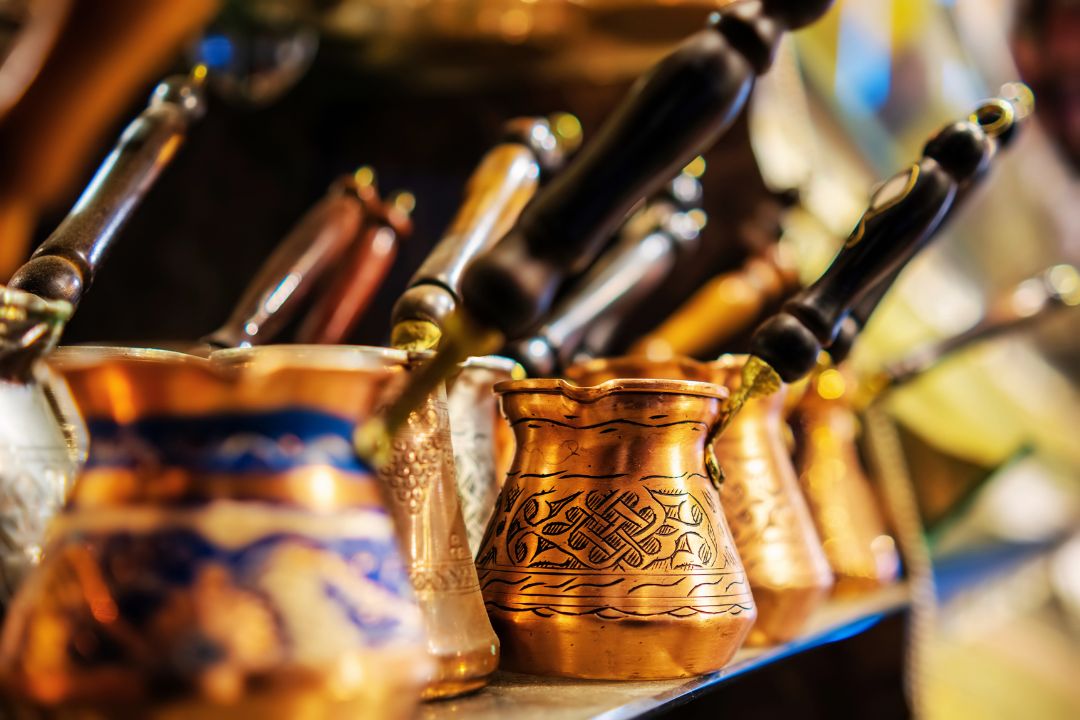
Turkish coffee represents one of the oldest brewing methods in the world. Turkey played a fundamental role in popularizing the beverage, refining its preparation techniques and transforming it into a central element of social interactions.
History of Turkish Coffee
The first coffeehouses appeared in Constantinople (modern-day Istanbul) in the 15th century. In the 16th century, the Turks invented the ibrik to reduce brewing time. This vessel, typically made of metal, copper, aluminum, or ceramic, features a long handle and a wide mouth that facilitates heating.
In 2013, UNESCO recognized the “Turkish Coffee Culture and Tradition” as an Intangible Cultural Heritage of Humanity.
How Is Turkish Coffee Made?
- Choose quality beans (specialty coffees are recommended)
- Grind extra-fine, almost to a powder
- Mix 10g of coffee with 100ml of room-temperature water in the ibrik
- Bring to a boil over heat, traditionally three times
According to Turkish culture, you must boil the coffee 3 times while thinking of a question you want answered about your future.
Special Characteristics
This method extracts less soluble compounds, resulting in an intensely bitter drink. Since it’s unfiltered, Turkish coffee contains more caffeine and delivers an intense flavor from the very first sip.
The Turks use spices like cinnamon, cardamom, and star anise to balance the bitterness, serving it in small portions accompanied by water.
Tasseography
The tradition includes tasseography — the interpretation of patterns left by the coffee grounds to answer the questions contemplated during brewing.
Want to try authentic Turkish coffee? Come to Consciencia Cafe and experience this traditional method!