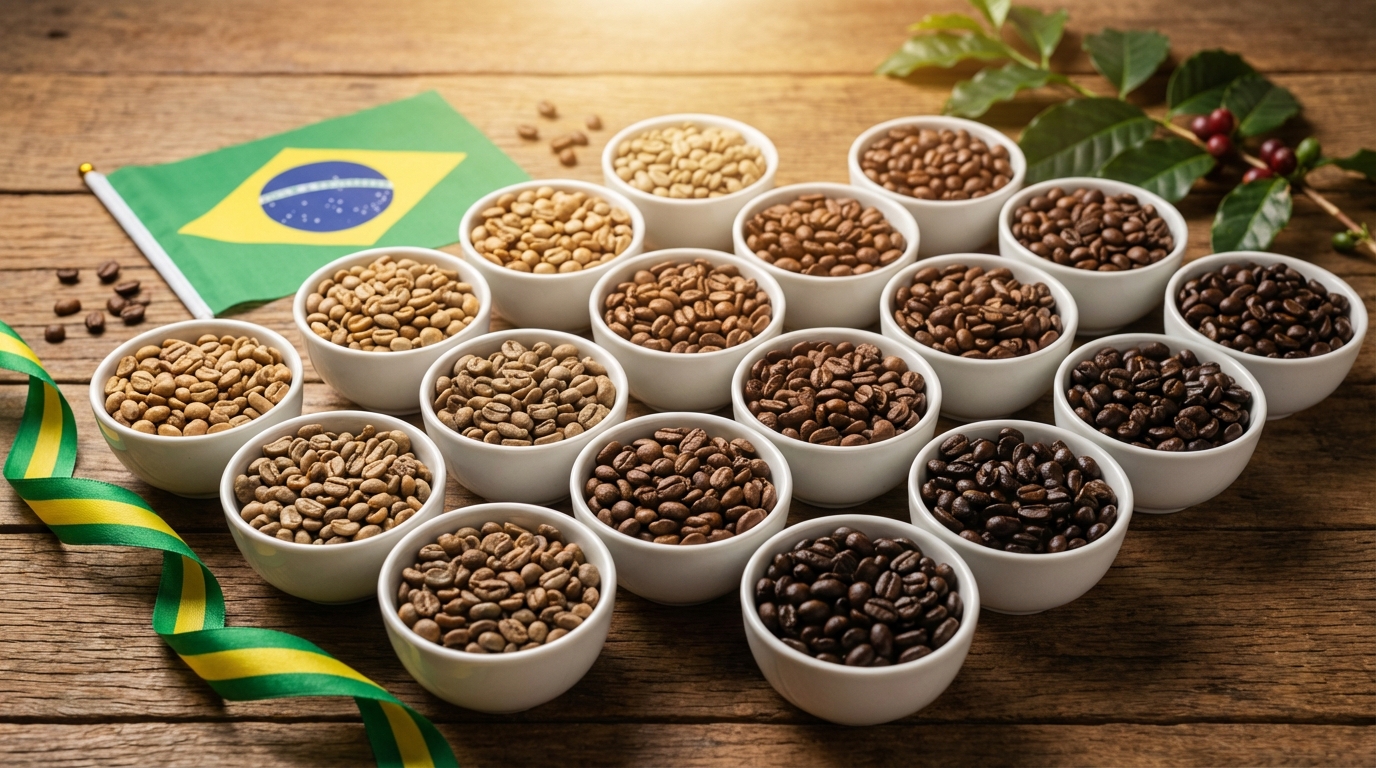
World Coffee Day, celebrated on April 14 according to the International Coffee Organization (ICO) calendar, is a moment to recognize the importance of this beverage that connects millions of people around the globe. For Brazil, the world’s largest producer and exporter of coffee, the date carries special meaning: it is an opportunity to reflect on the richness and diversity that make Brazilian coffee unique.
The history of World Coffee Day
The ICO established International Coffee Day in 2015, initially choosing October 1 as the global date. However, many countries already celebrated their own coffee days before that. In Brazil, April 14 was designated as National Coffee Day, and producers, roasters, and cafes across the country use the occasion to promote national coffee culture.
The choice of April is not arbitrary. In many of Brazil’s growing regions, April marks the beginning of the harvest in lower-altitude areas, a time of anticipation and celebration for farmers who have spent months tending their crops.
Brazil on the world stage
Brazil produces approximately one-third of all the coffee consumed worldwide. In absolute numbers, that means more than 50 million 60-kilogram bags per year, alternating between larger and smaller harvests in the coffee plant’s natural biennial cycle.
But the greatness of Brazilian coffee is not just about volume. The country harbors a diversity of terroirs, microclimates, and botanical varieties that few nations can match. From the savannas of Minas Gerais to the mountains of Espirito Santo, from the highland plateaus of Bahia to the soils of Parana, each region imprints its own character on the bean.
Major growing regions
Minas Gerais
Minas is the largest producing state, responsible for more than half of all Brazilian coffee. Within Minas, several regions have distinct identities:
- Cerrado Mineiro: the first Brazilian region to receive a Denomination of Origin for coffee. Altitudes between 800 and 1,200 meters, a well-defined dry season, and deep soils produce coffees with a chocolatey body, nutty notes, and moderate acidity.
- Sul de Minas (South of Minas): the highest-volume producing area in the state. Mountainous terrain with varied altitudes yields coffees ranging from full-bodied and sweet to complex and fruity.
- Matas de Minas: a region of Atlantic Forest with rugged topography. Coffees tend to be sweeter, with notes of caramel and ripe fruit.
- Chapada de Minas: a newer entrant in the specialty scene, with high altitudes producing coffees of vibrant acidity.
Sao Paulo
Sao Paulo was the cradle of commercial coffee cultivation in Brazil. Although it has lost its lead in volume, regions like Mogiana and Alta Paulista continue to produce coffee of notable quality. Mogiana in particular is known for balanced coffees with pronounced sweetness and medium body.
Espirito Santo
The second-largest producing state, Espirito Santo excels in both arabica and conilon (robusta). The Montanhas do Espirito Santo, at altitudes above 900 meters, produce specialty arabicas with floral and fruity profiles. Meanwhile, capixaba conilon is gaining recognition as quality raw material for blends and even as a specialty coffee in its own right.
Bahia
The Bahian Plateau, especially the Chapada Diamantina and Western Bahia regions, has emerged as a producing hub in recent decades. High altitude, controlled irrigation, and investment in technology result in high-scoring coffees with citric and floral acidity.
Parana
Parana has a deep historical relationship with coffee, which was the economic engine of the state in the twentieth century. Severe frosts in the 1970s and 1980s drastically reduced production, but the Norte Pioneiro region has been reclaiming ground with high-altitude specialty coffees. The Foz do Iguacu area, while not itself a growing zone, benefits from proximity to Parana’s coffee culture and to neighboring countries, Paraguay and Argentina, creating a unique meeting point of traditions at the Triple Border.
Varieties that make a difference
The botanical variety of a coffee plant is one of the most decisive factors in the flavor profile of the cup. Brazil cultivates dozens of varieties, each with its own characteristics.
Bourbon
Originating from the island of Bourbon (now Reunion), this variety is considered one of the noblest in the world. It produces coffees with high sweetness, a velvety body, and notes ranging from red fruits to chocolate. It is a lower-yielding plant compared to more modern varieties, which explains its higher price. It exists in Yellow Bourbon and Red Bourbon versions, with subtle profile differences between them.
Catuai
The result of a cross between Mundo Novo and Caturra, Catuai was developed by the Instituto Agronomico de Campinas (IAC) in the 1960s. It is a resilient, productive, and adaptable variety. Well-cultivated and processed Catuai coffees can achieve high scores, with a balanced profile, notes of nuts, caramel, and medium acidity. It comes in Yellow Catuai and Red Catuai versions.
Mundo Novo
Another creation of the IAC, Mundo Novo is a natural cross between Bourbon and Typica discovered in the 1940s in the town of Mundo Novo in the interior of Sao Paulo state. It is a vigorous, tall plant with high productivity. Its coffees tend to have a robust body, chocolatey sweetness, and low acidity, a profile that appeals to those who prefer fuller-bodied cups.
Arara
Arara is a relatively new variety that has been gaining prominence in quality competitions. Developed by EPAMIG (the Agricultural Research Company of Minas Gerais), it is a cross between Obata and Yellow Catuai. It offers rust resistance, good productivity, and, most notably, exceptional sensory potential. Arara coffees frequently display intense fruity notes, florals, and complex acidity.
Beyond traditional varieties
The specialty coffee scene in Brazil is constantly evolving. Varieties like Gesha (or Geisha), originally from Ethiopia and famous for its exuberant floral profile, are being experimentally cultivated on some Brazilian farms. Meanwhile, genetic improvement programs continue developing varieties that combine disease resistance with elevated sensory quality.
What you can do on World Coffee Day
- Try something new: if you always drink the same coffee, taste a different variety or a brewing method you have never tried.
- Know the origin: read the label on your coffee bag. Where does it come from? What is the variety? How was it processed? That information tells a story.
- Value the producer: quality specialty coffee requires work, knowledge, and investment. Choosing traceable coffees and paying a fair price is a way to sustain the entire chain.
- Share: invite someone to have a coffee and talk about what is in the cup. Coffee culture grows stronger when it is shared.
Diversity that inspires
Brazil is not merely the world’s largest coffee producer. It is a country where geographic, climatic, and botanical diversity translates into a virtually infinite palette of flavors. Celebrating World Coffee Day means celebrating that richness, from the farm all the way to the cup.
Visit Consciencia Cafe near Iguazu Falls and celebrate World Coffee Day by tasting Brazilian varieties from different regions. Every cup tells a different story.